by Luke Perry Saycon
There is little to expect when it comes to Filipinos showing love and support for their fellow countrymen who are established in various fields, especially those who gain global recognition. It is almost as if the pride of the Philippine flag is carried not only by those who rise to limelight, but by the Filipino people as well.
This mindset became second nature to Filipinos—an attempt to make a statement that they can be competent too. However, over time, the push for the ‘Pinoy pride’ agenda lost its essence and ironically turned into toxicity and an annoying joke, even among Filipinos themselves.
When did ‘Pinoy pride’ become problematic?
Whenever you open social media and come across a post highlighting the achievement of someone with Filipino identity—or something that originated from the Philippines or has some Filipino influence—chances are you will see comments from Filipinos expressing joy, gratitude, or over-the-top praises tied to Pinoy pride.
On the surface, this pride mentality is a good thing. These recognitions unite Filipinos in celebration. Moreover, they promote a sense of nationalism—accepting one’s identity and valuing one’s culture, practices, and heritage for what they are. This can also be attributed to another commonly known Pinoy phrase “sariling atin,” which refers to Filipino talents, products and services, particularly those produced locally.
Filipinos projected this idea of Pinoy pride even before the term was widely used by mainstream media and the internet. Notable personalities have long served as its symbols.
Lea Salonga brought pride to Filipinos early in her career through her international musical performances, from her monumental roles as Éponine in Les Misérables on Broadway and Kim in Miss Saigon to singing the official themes for Disney animated films like “A Whole New World” in Aladdin and “Reflection” in Mulan.
Similarly, boxing icon Manny Pacquiao inspired many athletes with his record-breaking accolades, including being the first ever eight-division world champion, the only boxer to win four lineal titles, and being named as the “Fighter of the Decade” by the World Boxing Council in the 2000s.
Global acknowledgments of the Philippines grew further when the Department of Tourism (DOT) launched the “It’s More Fun in the Philippines” campaign to promote Filipino citizens, culture, products, and destinations, and to boost domestic and foreign tourism. DOT data showed that tourist arrivals ramped up annually during the slogan’s stint before the COVID-19 pandemic—from 4,272,811 in 2012 to a record high of 8,260,913 in 2019.
So, what changed with Pinoy pride?
In recent years, the Philippines gained more popularity, and the pride of its citizens could not be higher. Filipinos gained more exposure worldwide and became more competitive—even excelling—in platforms usually dominated by other countries. Even Hollywood celebrities, mainstream artists, major league athletes, and other international personalities who openly talk about their part-Filipino ethnicity are frequently mentioned in Pinoy pride discussions.
However, these acknowledgements from foreign people and media marked the start of an unforeseen detriment to Pinoy pride. It became a double-edged sword. One side pointing toward respect and honor, the other threatening shame and disgrace.
A behavioral study by University of British Columbia professor Jessica Tracy—cited in an article by OneDown—identifies two kinds of pride: authentic pride and hubristic pride. The former refers to self-satisfaction obtained from one’s own achievements, while the latter focuses on seeking comparisons and validation from others.
In 2023, a ‘Pride in being a Filipino’ survey by the Social Weather Station found that over 90 percent of respondents said they are proud to be Filipino citizens, revealing that “Pinoy pride remains very high.” While this Filipino pride is very much alive, it also exposes a divide in how this pride is expressed, specifically in social media.
For Filipinos, foreign validation is a big deal. It became apparent that we are strongly tending to appeal to foreign masses—even chasing Western standards as if they possess superior quality and serve as an ideal blueprint for pride. Insecurity arises when that desired satisfaction is not met.
Its essence becomes shallow. On social media, Filipino netizens spout the term “Pinoy pride” unthinkingly in any media content they encounter, especially those with a foreign context that mentions, or even hints at, something related to Filipinos.
For instance, TikToker Dylan Page (@dylan.page) posted a video about the Philippines being the first country to declare a state of national energy emergency. It garnered over 17 million views. Some comments from Filipinos were sincere, while others were satirical—such as “PILIPINS NUMBER ONE WOOOOOO 🦅🦅🦅🇵🇭🇵🇭🇵🇭🇵🇭🇵,” which can also be perceived as an ironic form of coping.
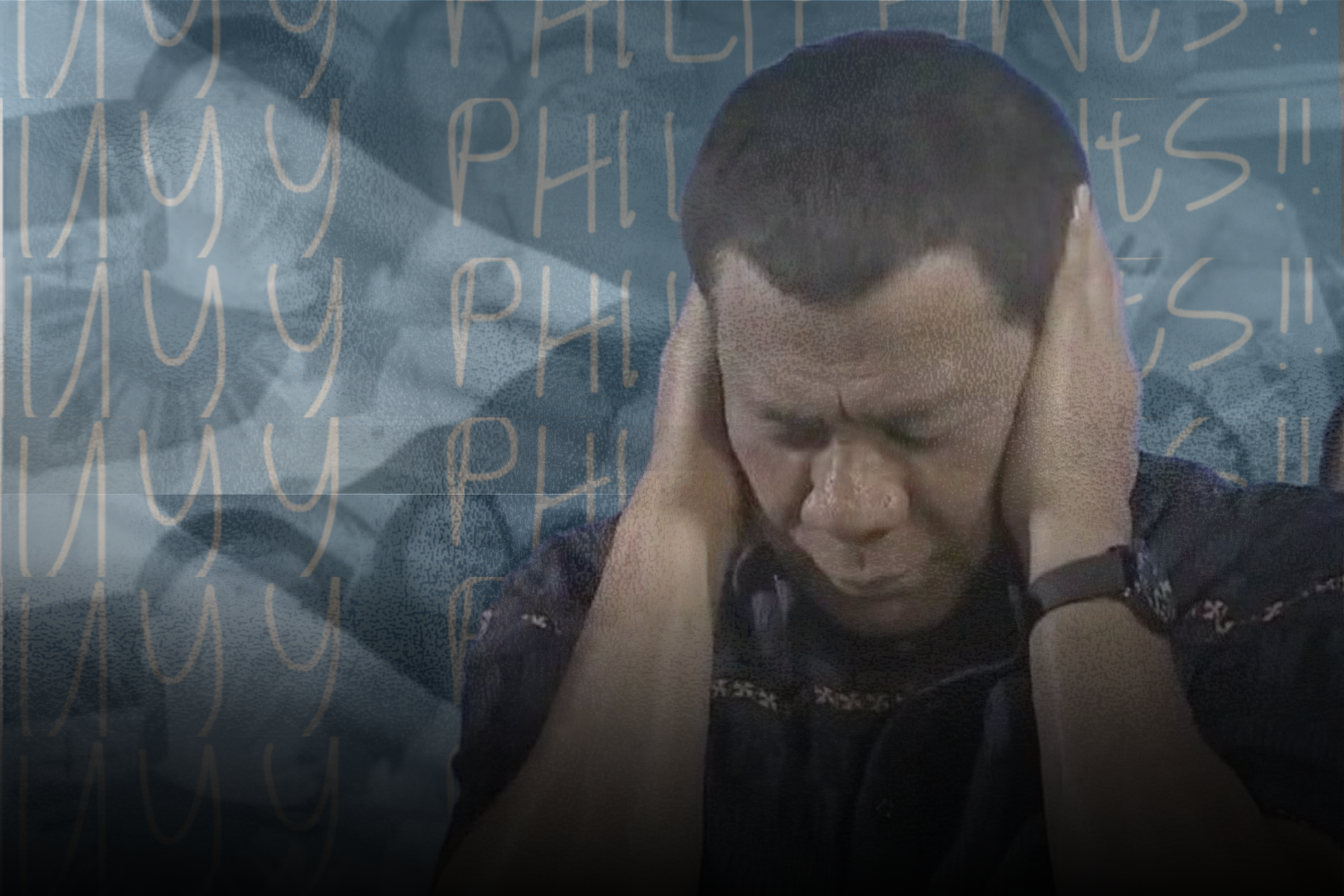
Users even use the viral TikTok sound by Miko (@mikumikoou), who spoofed Pinoy pride by shouting “Uy Philippines!” at any Filipino reference.
Then there is the behavior of claiming someone with barely any Filipino background as part of the Pinoy community, even when that person is not genuinely proud of that heritage.
Some foreign personalities and content creators exploit Filipinos’ habit of consuming content that feature Filipinos or the Philippines. They use clickbait thumbnails and titles for views, regardless of the topic—an overused strategy that Filipino YouTuber PaoLUL (@PaoLUL_) refers to as “Pinoy-baiting.” Some Filipino audiences respond with the same old script of “Pinoy pride” comments, while others criticize or attack the creator if they find the content offensive.
Some Filipinos “trying to be relevant” also learned a pattern: bombarding even serious news posts with “Pinoy pride” remarks.
When ABC7 News (@abc7newsbayarea) posted a TikTok video about a 3.6 magnitude earthquake in Alamo, California, some Filipinos commented that it was nothing compared to the recent 7.8 magnitude earthquake in General Santos City. While this may be a display of pride in Filipinos’ disaster resiliency, it also comes across as insensitive and self-centered.
These so-called “overproud Pinoys” often brag that things in the Philippines are “built differently,”even when the original post had no intention of making comparisons.
Reigniting the sense of true pride
Now, don’t get the wrong idea. Having significant exposure outside the country is no easy feat, let alone earning world-class recognition. The issue is that any attention given by other countries is often regarded as highly valuable by Filipinos and therefore becomes something that should be celebrated.
In reality, Filipinos can be world-class simply by embracing our identity and liberating ourselves from the superfluous need of approval from other countries.
Moreover, there is nothing wrong with building a good reputation—and even some boasting—when it is earned and well-deserved. But it has become rampant among younger Filipinos to change the perception of Pinoy pride, misusing it as a mere joke, a meme, and a clapback against the overproud Pinoys.
We Filipinos need to revisit the Pinoy pride mentality as a positive form of nationalism rather than a source of shame. It should be used to acknowledge and support Filipino capabilities and achievements in a reasonable manner. Not as a privilege to act superior, nor as an urge to receive applause from foreigners to alleviate our own insecurities.
Leave a Reply